A healthy diet is not a perfect menu or a strict set of rules. It is a pattern of choices repeated over time: fruit beside breakfast, water within reach, and vegetables added to a familiar dinner. These small details matter because food choices influence long-term health, yet busy schedules and limited budgets can make good intentions difficult to follow.
The World Health Organization recommends at least 400 grams of fruits and vegetables each day for people over age ten. It also advises adults to consume less than five grams of salt daily. These are practical benchmarks, not a demand for flawless eating. (WHO, “Healthy Diet,” 2024.) The recommendations offer a useful starting point for the Tips For Maintaining A Healthy Diet, while leaving room for cultural preferences and individual needs. A bowl of beans, frozen vegetables, or an apple can count toward a more balanced day.
Still, numbers can feel distant when dinner is already late. And advice does not fit everyone. Health conditions, food access, and personal circumstances can change what is realistic; a registered dietitian or healthcare professional can help tailor guidance. This article explores ten evidence-informed habits, from planning meals to reading labels, with everyday examples rather than promises of quick results. Progress may be uneven. That is normal. A missed vegetable serving does not erase a healthy pattern, and one “perfect” meal cannot create one. The useful question is simpler: what small choice can you repeat tomorrow?
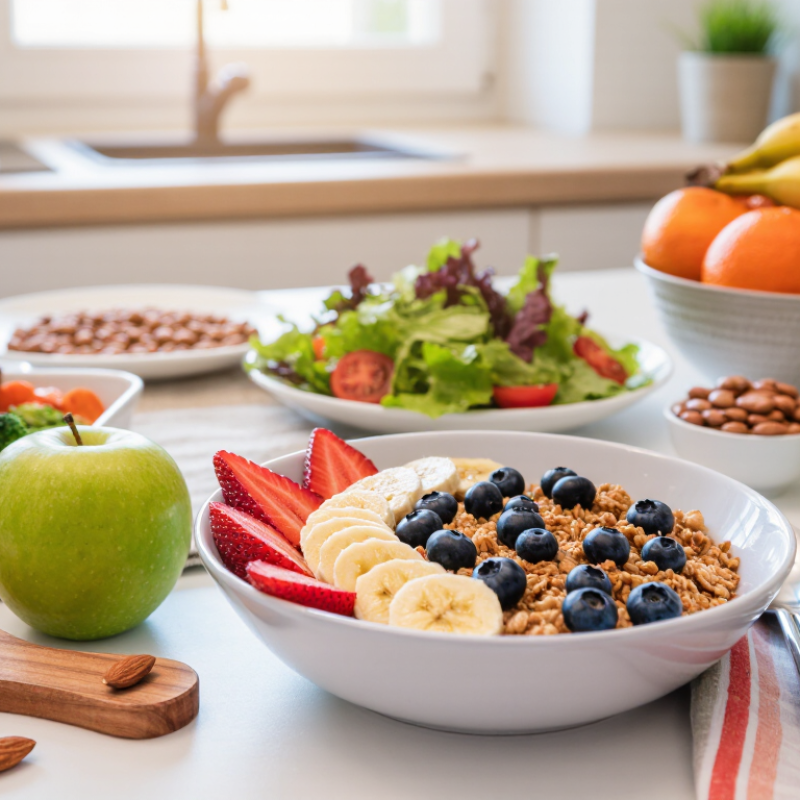
Understanding a healthy diet starts with the overall pattern, not one “perfect” meal. A useful foundation is variety: vegetables and fruit, beans or lentils, whole grains, nuts, and suitable protein sources. WHO’s Healthy diet fact sheet recommends at least 400 grams of fruit and vegetables each day for people over ten. It also advises adults to keep salt below 5 grams daily and free sugars below 10% of total energy. These are population-level guidelines, not a personal prescription. Needs can differ with age, health, and activity.
That is the foundation. In practice, picture a bowl with brown rice, lentils, chopped greens, and a little dressing; small, repeatable choices can make balanced meals easier. FAO and WHO’s Sustainable healthy diets: Guiding principles (2019) highlights variety, balance, and moderation. A varied diet can also provide fiber and other nutrients, though no single food guarantees good health. Read ingredient labels when possible, and compare serving sizes; numbers can be easy to misread when tired or shopping quickly. This framework is useful, but real schedules, budgets, and preferences complicate it. A meal that is “healthy” on paper may not suit everyone, and that deserves a second look.
10 Best Tips for Maintaining a Healthy Diet
Planning Balanced Meals for Everyday Nutrition
Planning balanced meals is less about perfect plates and more about repeating a workable pattern. Keep vegetables, fruit, whole grains, protein, and calcium-rich foods in view. A simple template helps: fill half your plate with produce, then divide the rest between grains and protein. On rushed evenings, frozen vegetables and canned beans can do the job. Not glamorous. Still useful.
The World Health Organization recommends at least 400 grams of fruits and vegetables daily and less than 5 grams of salt (WHO, “Healthy diet,” 2024). A practical day might include oatmeal, berries, and yogurt at breakfast; lentil soup, whole-grain bread, and carrots at lunch; then rice, roasted vegetables, and eggs or fish at dinner. Choose lower-sodium ingredients when possible, since sauces and packaged foods can quietly add salt. Check labels, too.
The Dietary Guidelines for Americans, 2020–2025, recommend making at least half your grains whole and varying protein choices. A grocery list with two vegetables, two fruits, one grain, and two proteins can prevent last-minute guesswork. Batch-cook a base, such as brown rice, but leave room for quick meals and changing appetites. Even a careful plan can overestimate how much fresh produce will get used, so frozen portions are a sensible backup, not a failure.
A simple visual guide to balancing food groups at a meal.
USDA MyPlate recommends filling half your plate with fruits and vegetables, and the other half with grains and protein foods. Choose whole grains often; dairy or a fortified alternative can be served alongside. Individual needs and portions vary.
Build meals around foods that look close to their natural form: beans, vegetables, fruit, whole grains, eggs, or fish. The World Health Organization’s 2020 healthy-diet guidance recommends at least 400 grams of fruits and vegetables daily for people over age ten. That is roughly five portions, though the size of a portion varies.
A simple visual guide helps: fill half your plate with vegetables and fruit, one quarter with whole grains, and one quarter with protein-rich foods. Harvard’s Healthy Eating Plate uses this approach, while leaving room for personal needs and cultural food choices. Small shifts count.
At breakfast, add berries to oats and use a smaller bowl if portions tend to creep upward. At lunch, measure cooked rice once, then compare that amount with what you usually serve. It may surprise you. Eat slowly enough to notice when you feel comfortably full; hunger and appetite do not always match neatly.
Packaged-food serving sizes can be useful reference points, but they are not prescriptions for everyone. Activity, age, health conditions, and pregnancy can change nutritional needs. A registered dietitian can help tailor portions, especially when medical needs are involved.
I still find eyeballing oils difficult: a quick pour can easily exceed a measured teaspoon. Use a spoon sometimes, and adjust without guilt.
Healthy eating is easier when it becomes a repeatable routine, not a strict test. Choose two dependable breakfasts and keep simple staples visible: oats, eggs, frozen vegetables, beans, and fruit. A CDC analysis of 2019 survey data found only 12.3% of U.S. adults met fruit recommendations. Just 10.0% met vegetable recommendations (MMWR, 2022). That gap suggests access, time, and habits matter—not just willpower. Start small. Add fruit to breakfast or spinach to soup.
The World Health Organization recommends at least 400 grams of fruits and vegetables daily for people over age 10. Treat that as a guide, not a reason to feel guilty over one missed serving.
Busy days need a backup plan. Keep a shelf-stable snack in your bag, pack lunch the night before, or build a meal around vegetables, protein, and a filling grain. Plans wobble. If takeout happens, return to your usual pattern at the next meal; skipping food to compensate can leave you overly hungry later. Budget pressure is real, so compare seasonal produce, frozen vegetables, and dried or lower-sodium canned beans. Check labels when practical, but don’t turn every meal into arithmetic. A brief food log for three days may reveal when hunger, stress, or rushed mornings steer your choices. It can also feel tedious. Keep only what helps you adjust.
Maintaining a nutritious diet over time is less about perfect meals and more about repeatable choices. Keep easy staples nearby: oats, eggs, beans, frozen vegetables, fruit, and whole-grain bread. On busy evenings, a bowl of beans, rice, and chopped tomatoes can be more realistic than an elaborate recipe. Small routines help. I often find that washing fruit after shopping makes it easier to reach for later.
Build meals around vegetables, a source of protein, and a filling carbohydrate, adjusting portions to appetite and activity. Add variety gradually; trying one unfamiliar vegetable each week is less daunting than changing every meal. Keep water visible, and pack a snack if long gaps leave you overly hungry. Perfection backfires. If a plan feels restrictive, revise it rather than treating one unplanned meal as failure. Cultural foods, budgets, allergies, and health conditions all shape what works; people with specific nutrition needs can ask a registered dietitian or clinician for individualized advice. Some weeks will still be messy. Check what made the routine difficult—time, cost, or preparation—and make one practical adjustment, such as cooking extra lentils for tomorrow’s lunch.
| Tip | Focus | Practical habit | Useful benchmark |
|---|---|---|---|
| 1 | Eat a variety of vegetables and fruit | Include different colors and types throughout the week. Add fruit to breakfast and vegetables to lunch and dinner. | The World Health Organization recommends at least 400 g (about five portions) of fruit and vegetables per day for people over 10, excluding starchy roots such as potatoes. |
| 2 | Choose whole grains often | Make oats, brown rice, whole-wheat bread, barley, or other minimally processed whole grains regular choices. | Check ingredient lists for whole-grain ingredients near the beginning. Dietary guidance commonly recommends making at least half of grain choices whole grains. |
| 3 | Include varied protein sources | Rotate beans, lentils, peas, nuts, seeds, eggs, fish, poultry, and other protein foods to add variety to meals. | Legumes can contribute protein and dietary fiber. Choose a mix of plant and animal sources that fits your preferences and nutritional needs. |
| 4 | Make fiber-rich foods routine | Build meals around vegetables, fruit, legumes, whole grains, nuts, and seeds. Increase fiber gradually and drink fluids regularly. | The European Food Safety Authority sets an adequate fiber intake of 25 g per day for adults. |
| 5 | Limit added and free sugars | Choose water or unsweetened drinks more often, and enjoy sweet foods in smaller portions rather than making them everyday staples. | WHO recommends keeping free sugars below 10% of total daily energy intake; a lower intake may provide additional health benefits. |
| 6 | Reduce excess salt | Taste food before adding salt. Use herbs, spices, citrus, or garlic for flavor, and compare labels on packaged foods. | WHO recommends that adults consume less than 5 g of salt per day from all sources. |
| 7 | Choose unsaturated fats more often | Use foods such as nuts, seeds, avocado, and suitable vegetable oils in place of foods high in saturated or trans fats. | WHO recommends limiting saturated fats to less than 10% of total daily energy and trans fats to less than 1%. |
| 8 | Drink fluids regularly | Keep water available and drink with meals. Adjust fluid intake for heat, physical activity, illness, and individual medical advice. | Fluid needs vary with age, climate, activity, and health. Water is a suitable everyday drink for most people. |
| 9 | Plan balanced, satisfying meals | Combine vegetables or fruit with a protein food and a whole-grain or other fiber-rich carbohydrate. Adjust portions to appetite and needs. | A varied eating pattern is generally more useful over time than relying on a single food or a restrictive short-term plan. |
| 10 | Make healthy habits practical | Plan a few meals ahead, keep convenient nutritious staples on hand, and prepare extra portions when it suits your schedule. | Small, repeatable changes are easier to maintain. Adapt choices to your budget, culture, preferences, and any advice from a qualified health professional. |
Aim for variety: vegetables, fruit, beans, whole grains, nuts, and suitable protein sources. No single food guarantees good health.
Guidance suggests at least 400 grams daily for people over ten, roughly five portions. Treat this as a guide, not a personal prescription.
Fill about half your plate with vegetables and fruit. Use one quarter for whole grains and one quarter for protein-rich foods. Adjust to your needs.
Try a smaller bowl for oats or measure cooked rice once. Eyeballing oil is still tricky for me. A quick pour can add up.
Keep oats, beans, fruit, or frozen vegetables within reach. Pack lunch the night before, or carry a shelf-stable snack. Plans wobble.
Return to your usual eating pattern at the next meal. Skipping food to compensate may leave you overly hungry later.
Compare seasonal produce, frozen vegetables, and dried or lower-sodium canned beans. Check labels when practical, but don’t turn every meal into arithmetic.
A brief three-day log may reveal how stress, hunger, or rushed mornings affect choices. It can feel tedious. Keep only what helps.
A healthy diet begins with understanding how different foods support the body. Aim to include a balance of vegetables, fruits, whole grains, protein-rich foods, and healthy fats, while drinking enough water. Planning meals ahead can make everyday nutrition easier: consider what you will eat throughout the day, prepare simple ingredients in advance, and choose a variety of foods to help keep meals satisfying and nourishing.
Practical Tips For Maintaining A Healthy Diet include choosing wholesome, minimally processed foods and paying attention to portion sizes without being overly restrictive. Build steady habits by eating mindfully, keeping nutritious options within reach, and making gradual changes that fit your routine. Busy schedules, cravings, and unexpected plans can make consistency challenging, so focus on flexible choices rather than perfection. Over time, review what works for you, adjust your meals as your needs change, and treat healthy eating as a sustainable part of daily life.

JETZ Foods