How To Build A Balanced Daily Diet is about choosing nourishing foods you can realistically repeat, not chasing perfect meals. A weekday plate might include brown rice, roasted vegetables, beans, and eggs; breakfast could be oats, yogurt, and fruit. Small choices add up. This guide explores how to combine vegetables and fruit, whole grains, protein-rich foods, and suitable fats across ordinary meals. It also considers water, portions, meal timing, and practical shopping habits, without treating one menu as right for everyone.
Nutrition needs differ with age, activity, health conditions, culture, budget, and food access. Public-health guidance generally supports varied, nutrient-dense foods and limiting excess added sugars and sodium; individual needs can still vary. If you manage diabetes, have food allergies, are pregnant, or follow a prescribed diet, consult a registered dietitian or qualified clinician before making major changes. The aim is a flexible pattern: perhaps pack an apple, keep canned beans on hand, or add greens to soup. A rushed lunch may still be unbalanced. Notice it, then adjust the next meal rather than labeling the day a failure. That is more realistic. The sections ahead turn broad nutrition principles into clear daily steps, with room for preferences, imperfect routines, and thoughtful reflection.
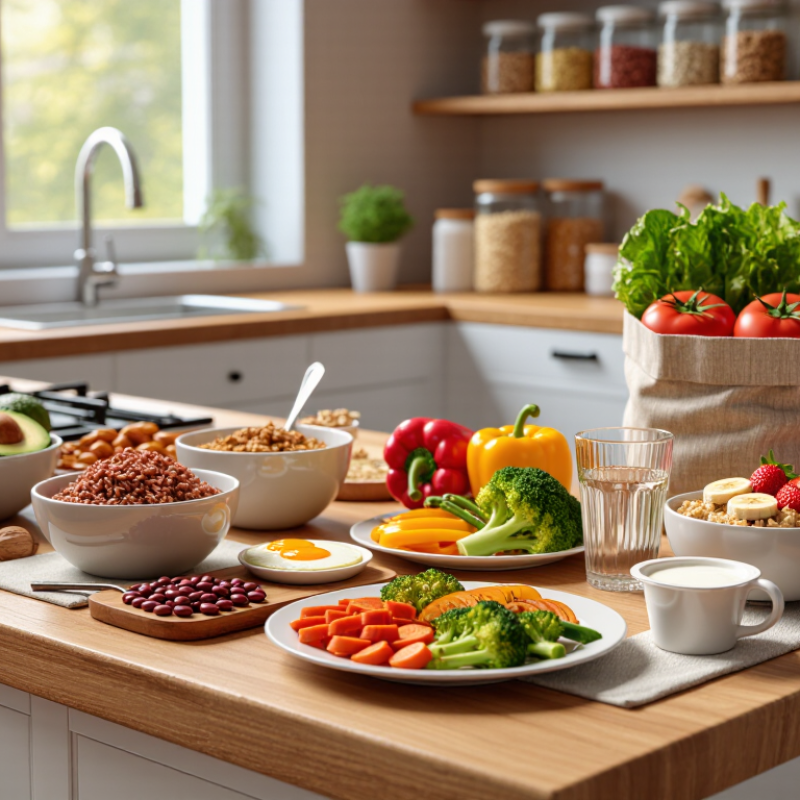
A balanced daily diet is not a perfect plate repeated every day. It is a practical pattern that supplies energy, protein, fats, carbohydrates, fibre, vitamins, and minerals across meals. Needs differ with age, activity, health, and life stage, so one fixed menu cannot suit everyone. That is the baseline. The National Academies’ Dietary Reference Intakes set adult macronutrient ranges at 45–65% of calories from carbohydrates, 10–35% from protein, and 20–35% from fat. These are broad planning ranges, not targets that must be calculated at every meal.
The World Health Organization’s Healthy diet guidance recommends at least 400 grams of fruit and vegetables daily for people over age ten. It also advises keeping free sugars below 10% of total energy and salt below 5 grams a day. Picture oats with sliced fruit at breakfast, beans beside rice at lunch, and vegetables filling part of the dinner plate. Add protein and unsaturated-fat sources, such as eggs, lentils, nuts, or fish, according to personal needs and access. Real life gets messy. A missed vegetable serving does not define the whole day; look at patterns over time, and adjust gently. These figures are useful reference points, not a substitute for tailored advice when medical needs are involved.
How to Build a Balanced Daily Diet in 2026?
Selecting Foods from Essential Nutrient Groups
A balanced day draws from several food groups, rather than relying on one “perfect” meal. Add vegetables and fruit in different colors: sliced pear at breakfast, spinach in a sandwich, or roasted carrots at dinner. Fresh, frozen, and canned options can all fit. Check canned foods for added salt or sugar when practical.
Choose whole grains such as oats, brown rice, or whole-grain bread for satisfying meals. Include protein from beans, lentils, eggs, fish, tofu, or poultry. A bowl of rice with lentils and chopped vegetables is simple and filling. Dairy foods, or calcium-fortified alternatives, can provide calcium and other nutrients. Needs vary, so people with allergies, medical conditions, or specific dietary requirements may benefit from professional advice.
Unsaturated fats from nuts, seeds, avocado, or olive oil belong in a varied diet, though portions can creep up easily. I sometimes forget that a quick snack counts too; a handful of nuts and a piece of fruit can make it more nourishing. Keep it practical. Drink water regularly, and adjust food choices to your appetite, activity, culture, and budget. A plan that looks balanced on paper may need changing when real schedules get messy.
A balanced day does not require weighing every ingredient. Use your plate as a practical guide: fill about half with vegetables or fruit, one quarter with protein, and one quarter with grains or starchy foods. A cupped hand can estimate a serving of cooked rice or oats; your palm offers a rough guide to fish, beans, eggs, or meat. These are starting points, not rules. Appetite, activity, and health needs differ.
Build meals from foods that work together. Try oatmeal with yogurt and sliced pear at breakfast, or eggs with whole-grain toast and tomatoes. At lunch, combine lentils, brown rice, cucumber, and leafy greens; add olive oil or nuts for satisfying fats. Dinner might pair roasted potatoes, salmon or tofu, and broccoli. Keep water nearby. Simple details help.
Portions can feel awkward at first. Mine do, especially when a meal is shared or eaten late. Serve a reasonable amount, eat at a comfortable pace, then check whether you are still hungry. A small snack, such as fruit with yogurt, can bridge a long gap between meals. If your usual plate looks different, change one part at a time rather than chasing a perfect plan.
| Meal | Vegetables and Fruit | Protein | Grains and Starchy Foods | Dairy or Fortified Alternative | Practical Meal Combination |
|---|---|---|---|---|---|
| Breakfast | About 1 cup berries or chopped fruit | About ¾ cup plain yogurt, or an egg alongside breakfast | ½ cup dry oats, cooked; choose whole-grain oats | Yogurt provides a dairy option; fortified, unsweetened soy beverage can be an alternative | Oatmeal topped with berries and yogurt. Add a small handful of nuts or seeds if desired. |
| Lunch | Fill about half the plate with salad vegetables or cooked vegetables; add a piece of fruit if wanted | About 3 oz cooked chicken, fish, tofu, beans, or another protein choice | About ½–1 cup cooked brown rice, quinoa, or another whole grain | A small serving of milk, yogurt, or a calcium-fortified alternative can fit if it suits the meal | A bowl with leafy greens and other vegetables, beans or chicken, and a modest serving of whole grain. |
| Snack (optional) | One piece of fruit, such as an apple or pear | About 1 oz unsalted nuts, or a small serving of hummus | Whole-grain crackers can be added if extra food is needed | Optional: a small serving of plain yogurt | Fruit with nuts, or vegetables with hummus. Choose a snack based on hunger and daily routine. |
| Dinner | About half the plate: for example, 1–2 cups of mixed vegetables | About 3–4 oz cooked fish, poultry, tofu, or beans | About ½–1 cup cooked whole grain, or a moderate serving of potato | Optional, depending on the rest of the day and personal preference | Baked fish or tofu with roasted vegetables and a serving of brown rice or potato. |
| Daily planning check | Include a variety of vegetables and fruit across meals; aim for produce to take up about half the plate at main meals | Vary protein sources, including beans, lentils, nuts, eggs, fish, poultry, or tofu | Choose whole-grain options often; adjust portions to appetite and activity | Include dairy or a suitable fortified alternative if part of your eating pattern | Drink water regularly and limit frequent sugary drinks. No single portion plan suits everyone. |
Portion amounts are practical examples, not individualized prescriptions. Energy and nutrient needs vary with age, body size, activity, health, and other factors. For personal dietary needs, consult a qualified health professional.
A balanced daily diet should fit the shape of your day, not an imaginary perfect schedule. If breakfast is rushed, keep something simple ready, such as plain yogurt, oats, and a banana. On slower mornings, eggs with whole-grain toast and tomatoes may feel more satisfying. Small changes can make meals easier to repeat.
Build lunch and dinner around foods you actually enjoy and can prepare. A useful starting point is half a plate of vegetables or fruit, one quarter protein, and one quarter grains or starchy foods. For example, pair roasted carrots and greens with beans and brown rice. Frozen vegetables count, too. They can save time on busy evenings. I sometimes misjudge how much preparation a week allows, so leaving one meal flexible helps.
Dietary needs may change these choices. A person avoiding lactose might choose fortified alternatives, while someone managing a medical condition may need individualized guidance from a qualified clinician or dietitian. Keep regular meal times if they suit your appetite, but adjust when work, exercise, or hunger shifts. Plans wobble. Notice what leaves you comfortably energized, and what is difficult to maintain. A food and routine note for several days can reveal patterns without turning every meal into a calculation.
A balanced diet is not a fixed menu; it is a pattern to review as your routine, appetite, and health needs change. Keep a simple seven-day food log, noting meals, snacks, and how satisfied you feel afterward. Small details matter: a skipped breakfast, a rushed lunch, or vegetables left untouched can reveal where your plan is difficult to maintain. Be honest. A perfect-looking log is less useful than an accurate one.
Use reliable benchmarks, not rigid targets. The World Health Organization’s healthy-diet guidance recommends at least 400 grams of fruit and vegetables each day. Compare that with your usual week, then add practical portions, such as an apple at breakfast or frozen vegetables beside dinner. The National Academies’ Dietary Reference Intakes set broad adult ranges of 45–65% of calories from carbohydrates, 20–35% from fat, and 10–35% from protein. These population ranges are not personal prescriptions. A registered dietitian can help interpret them when needs differ.
Review your notes every two to four weeks. Check energy, hunger, digestion, and whether meals fit your schedule; change one choice at a time so you can notice its effect. A larger lunch might reduce late-afternoon grazing, though it may not solve the whole problem. Some weeks will be messy. Adjust without treating one meal as failure.
Adult macronutrient ranges as a percentage of total daily calories
These reference ranges are for adults and are not individualized targets. Review your usual food choices over time, consider your energy needs and health goals, and adjust portions and food variety as needed. Ranges are from the National Academies’ Dietary Reference Intakes.
It is a flexible pattern that provides energy, protein, fats, carbohydrates, fibre, vitamins, and minerals. Not a perfect plate.
Fill about half your plate with vegetables or fruit. Add one quarter protein and one quarter grains or starchy foods. These are starting points, not strict rules.
A useful general reference is at least 400 grams daily for people over age ten. An apple at breakfast and frozen vegetables at dinner can help. Some days fall short.
No. Broad adult planning ranges are 45–65% of calories from carbohydrates, 10–35% from protein, and 20–35% from fat. They are not personal targets.
General guidance suggests keeping free sugars below 10% of daily energy and salt below 5 grams a day. These are reference points, not a reason to panic over one meal.
Try oatmeal with yogurt and pear, or lentils with brown rice, cucumber, and leafy greens. At dinner, pair potatoes with tofu or fish and broccoli. Keep it simple.
A cupped hand can roughly guide a serving of cooked rice or oats. Your palm can estimate fish, beans, eggs, or meat. Appetite matters too.
Fruit with yogurt can bridge a long gap between meals. Eat at a comfortable pace, then check whether you are still hungry. Portions can feel awkward.
Keep a simple seven-day food log and review it every two to four weeks. Note meals, hunger, energy, and digestion. Change one choice at a time; some weeks will still be messy.
How To Build A Balanced Daily Diet begins with understanding your individual nutritional needs and the basic principles of balance, variety, and moderation. A well-rounded eating pattern includes foods from essential nutrient groups, such as vegetables and fruits, grains, protein-rich foods, and sources of healthy fats. Choosing a range of foods can help provide important nutrients while keeping meals enjoyable and varied.
Practical portions and thoughtful combinations make these principles easier to follow. Plan meals around your daily routine, preferences, and dietary needs, and include a mix of food groups throughout the day rather than relying on a single meal to provide everything. Review how your choices fit your schedule and how sustainable they feel over time. You can then make gradual adjustments to portions, ingredients, or meal timing as your needs change, building a flexible routine that supports consistent, balanced eating.

JETZ Foods